 2:45
Parent Progress Review (Live)
Live one-to-one lesson example.

Kalamullah's Arabic conversation course takes students from clear pronunciation and listening for real speech through everyday conversations and role-plays, straight to expressing opinions, telling stories, and speaking spontaneously in Modern Standard Arabic.
 6–9
Kalamullah’s Arabic conversation classes start with pronunciation and intonation for natural speech and listening to spoken Arabic at a real pace. Students then practice everyday topics such as family, work, travel, food, and community through conversation and role-plays, picking up common expressions and conversational phrases along the way.
The course builds toward extended speaking through opinions, storytelling, and discussion, and closes with spontaneous conversation on unplanned topics.
Most learners understand more Arabic than they can say. Kalamullah's Arabic speaking course online closes that gap by making speaking the center of every lesson, with a native teacher listening, responding, and correcting in real time.
Every teacher assigned to Kalamullah’s Arabic speaking course has formal study in Arabic and experience leading conversation practice. Credentials are verified before assignment, so students hear and copy natural, correct Arabic.
Kalamullah's Arabic speaking practice uses real conversations, role-plays, and discussions instead of repeating sentences from a textbook. Students learn to respond, ask follow-up questions, and keep a conversation going.
Every conversation lesson at Kalamullah is private, so the student speaks as much as possible without the pressure of a group. The teacher corrects key errors without interrupting the flow, then reviews them at the right moment.
Kalamullah provides qualified female conversation teachers for students who prefer or require a same-gender teacher. The preference is selected at registration and honored from the trial session onward, with no change to scheduling or lesson content.
Kalamullah's conversation curriculum moves from pronunciation to everyday topics, extended speaking, and spontaneous conversation in a fixed order. The teacher confirms each stage in live speaking before the student advances.
Book a free first class and we will identify the right level and next milestone.
Book a free trialEach module builds directly on the previous one, giving students a clear path from hesitant sentences to confident, spontaneous conversation.
The course opens with a relaxed conversation that shows the teacher the student's vocabulary, grammar, pronunciation, and confidence level, along with the situations they most want to handle in Arabic.
The teacher uses this to choose the topics and pace for each student, so practice focuses on what they actually need to say.
Students work on clear pronunciation, natural intonation, and the rhythm of spoken Arabic, while listening to short dialogues at a real speaking pace.
By the end of this module, students are understood easily and follow spoken Arabic with more confidence.
The teacher leads conversations and role-plays on family, work, travel, shopping, food, health, and community life, introducing common expressions and conversational phrases for each topic.
Each topic ends with a speaking checkpoint, so students move on only when they can handle the situation on their own.
Students learn to give and defend opinions, describe experiences, tell stories in the past, and talk about plans, speaking for longer stretches with less support from the teacher.
The teacher builds speaking time gradually, helping students connect ideas and keep talking without stopping to translate.
The final module brings every skill together through unplanned conversations on new topics, quick-response practice, and discussion of short audio and video clips.
At the close of this module, students speak Arabic spontaneously and confidently, with the foundation to continue into Kalamullah’s Arabic Language Course or, for stronger speakers, the Advanced Arabic Course.
Every outcome below is something the student can demonstrate to their Kalamullah teacher by the end of the conversational Arabic course, not simply a topic that was covered during sessions.
Students speak Arabic with clear pronunciation and natural intonation.
This is assessed in live conversation, where the teacher confirms the student is easily understood.
Students understand short dialogues and questions spoken at a natural pace.
They respond without asking for frequent repetition.
Students manage real situations such as travel, shopping, and appointments through role-play.
They use the right conversational phrases for each situation.
Students express an opinion on a familiar topic and give reasons for it.
They respond to the teacher's questions and counterpoints in Arabic.
Students describe a past experience or tell a short story in connected Arabic.
They use past verbs and linking words correctly without stopping to translate.
Students hold an unplanned conversation on a new topic with their teacher.
This spontaneous conversation is the measurable endpoint of the course at Kalamullah.
Watch real Kalamullah conversation lessons below and see how students start speaking Arabic with confidence.
Short class snippets show how the teacher explains, listens, corrects and confirms progress.
2:45Live one-to-one lesson example.
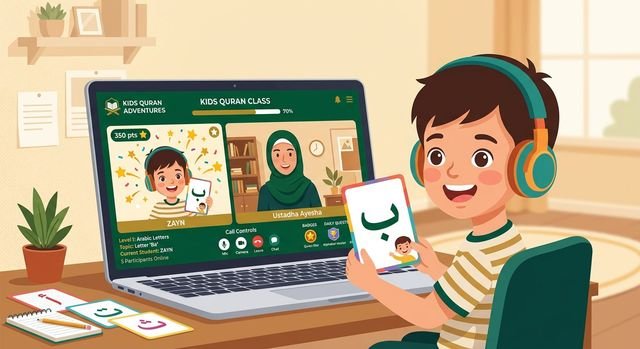 2:45
Live one-to-one lesson example.
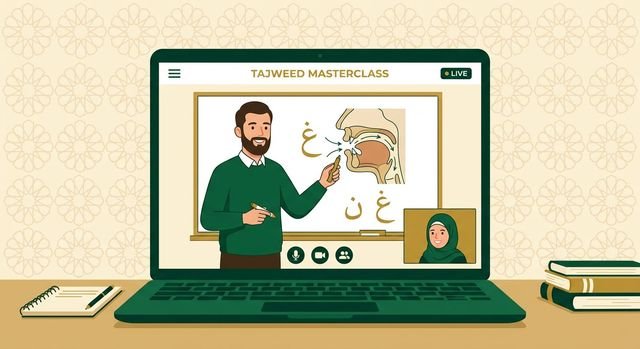 2:45
Live one-to-one lesson example.
Unscripted words from the people who took the course — recorded after their final class.
“Live correction made my recitation clearer and gave me a practical path to keep improving.”
“Live correction made my recitation clearer and gave me a practical path to keep improving.”
“Live correction made my recitation clearer and gave me a practical path to keep improving.”
Teacher language, speciality and availability are considered before the regular schedule starts.
Read what students say about building their speaking confidence with Kalamullah before booking your free trial.
“The teacher gives clear correction and a practical next step every week.”
“The teacher gives clear correction and a practical next step every week.”
“The teacher gives clear correction and a practical next step every week.”
See measurable examples from learners who started at different levels.
Follows a weekly target and muraja’ah plan independently.
Applies core rules naturally with fewer corrections.
Reads short surahs with stronger fluency and confidence.
Compare nearby routes before choosing the best starting point.
BeginnerBeginnerBeginnerUnderstand recurring Quranic vocabulary and sentence patterns.
View courseBeginnerUnderstand recurring Quranic vocabulary and sentence patterns.
View courseBeginnerUnderstand recurring Quranic vocabulary and sentence patterns.
View courseA quick answer to the questions that come up most often before someone books their first trial class — a mix of questions specific to this course and questions about the academy as a whole.
Students should know basic vocabulary and be able to build simple sentences in Arabic. Those who are not yet at this level are advised to complete Kalamullah's Arabic Language Course for Beginners first.
If you understand some Arabic but struggle to speak or freeze in conversation, this course fits you. Your free trial includes a short conversation to confirm your level.
The course focuses on conversational Modern Standard Arabic, which is understood across the Arab world and used in media, lectures, and formal settings. In daily life, Arabs usually speak a local dialect, but MSA gives you a shared foundation that every Arabic speaker understands, and makes learning any dialect much easier later.
Most of each session is spent with you speaking. Explanations are kept short so the lesson time goes to real conversation practice.
Yes. Kalamullah provides qualified female conversation teachers for sisters and girls. The preference is confirmed at registration and matched before the free trial session is booked.
Yes. Sessions can be rescheduled when genuine conflicts arise, with morning, afternoon, and evening slots available seven days a week across all time zones.
Book the free first class. We will check level, match the teacher and show the next milestone.
7 free trial spots remaining this week
Choose the weekly frequency that fits the learner after the free trial.